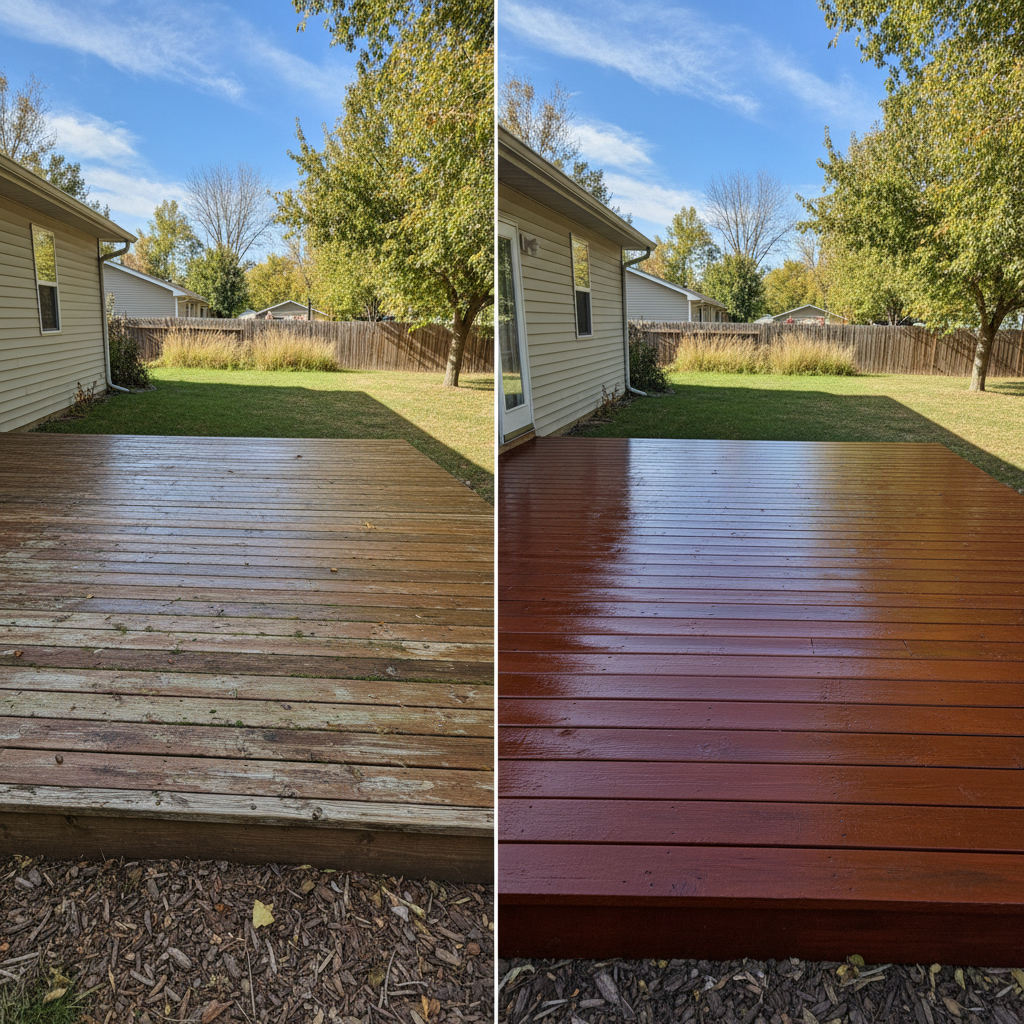
The winter snow has finally melted off the back patio, and homeowners in Fargo, ND are staring at weathered decks that need attention. Choosing the right deck stain for the Red River Valley climate is not just about picking a color you like. If you pick the wrong formula, you will be out here doing the whole job over again next spring. Fargo Painting Company breaks down the real differences between oil-based deck stains and water-based deck stains so you can make a choice that lasts.
The Case for Oil-Based Stains
Oil-based stains have been the standard for decades around here for a good reason. They soak deep down into the wood fibers instead of just sitting on top like a skin. When you have cedar or pressure-treated pine taking a beating from sub-zero January temperatures and blazing July humidity, that deep penetration matters. Oil repels moisture naturally, which keeps the freeze-thaw cycle from cracking your boards apart.
Application is straightforward too. Oil does not dry the second it hits the wood on a warm summer afternoon in Fargo, meaning you can work a wet edge without leaving ugly lap marks all over your deck. But they take a full day or two to cure completely, and local VOC regulations have made some traditional formulas harder to find or more expensive.
What to Expect from Water-Based Stains
Water-based stains have come a long way over the years. Modern acrylic formulas hold their color much longer under intense UV rays. If you hate watching your dark brown deck fade to a chalky gray by August, water-based options usually win on color retention.
They dry fast. Sometimes too fast if you are working under the hot Fargo sun, but the upside is you can get two coats down and clean up your brushes with plain soap and water in a single afternoon. They also let the wood breathe a bit more, which reduces blistering and peeling when trapped moisture tries to escape.
Cost and Durability in Fargo Weather
Upfront costs are close, but long-term value is where things diverge. Oil-based stains usually need reapplication every two to three years because they break down slowly under heavy foot traffic. Water-based options might stretch to three or four years on vertical surfaces, but horizontal deck boards take a beating from snow shovels and ice scrapers that will test any finish.
My Local Recommendation
If your deck gets pounded by direct sun all day and you want less repetitive maintenance, grab a high-quality semi-transparent water-based stain with strong UV blockers. If you are dealing with older, drier wood that needs maximum moisture protection against brutal winter freezes, go with a penetrating oil-based formula. Fargo Painting Company sees both succeed if you prep the wood properly by power washing and letting it dry completely before a drop of stain goes down.